
madonnaybarra
madonnaybarra
BRRRR Strategy: Formula to buy 5 Rental Properties in 2 Years And Payoff In 7
Among the primary reasons individuals become thinking about genuine estate investing is the allure of financial liberty. Purchase enough realty to cover your personal expenditures and voilà, you’re economically independent. For some, among the hardest parts might be finding out how to figure out whether the rental residential or commercial property in question is good financial investment.
There are lots of techniques and to carry out in order to achieve the task of financial self-reliance, like Josh Sheets’ integration of individual and professional financing, Fernando Aires’ 3 principles to accomplishing financial self-reliance, devoting to this straightforward four action procedure, and passively investing in apartment or condo syndications, among numerous others.
However, the fastest financial freedom method I have actually ever discovered is Andrew Holmes’ 2-5-7 method. He has effectively implemented this technique, which is a variation of the prominent BRRRR method (buy, rehabilitation, lease, refinance, repeat) on over 160 residential or commercial properties. In our recent discussion, he lays out, in severe information, his exact detailed 2-5-7 formula for how he buys a minimum of 5 residential or commercial properties every 2 years and pays them off in 7.
What is the 2-5-7 Investment Formula?
Andrew’s financial investment method follows what he calls the “2-5-7” formula. In 2 years, the goal is to collect a minimum of 5 residential or commercial properties and utilizing the capital pay them off in 7 years. Andrew stated, “The formula does not change, it’s simply the variety of residential or commercial properties, just how much capital you wish to produce, and you scale based upon that.”
In order to accomplish his specific investment objectives, Andrew has the following 4 additional requirements at are not always consisted of in the original BRRRR Strategy:
1. Deal Location – “The majority of people, whenever they own rental residential or commercial properties, they tend to purchase … in locations that are rather tough. We have a different approach, which is we tend to purchase in support locations, right next to what we would call premium areas. Basically, if premium locations are A, we tend to purchase B- or C+.” Click here for my supreme guide on picking a target investment market.
2. Minimum 25% equity- “Whenever we’re buying a residential or commercial property, after rehab, it must have a minimum of 25% equity.”
3. Small Ranches- “We focus on purchasing little, three-bedroom, one and one-and-a-half bath ranches.”
4. $400 to $450 capital- “They must cash flow to the tune of $400 to $450 per residential or commercial property after all expenses, including management.”
Similar to the BRRRR Strategy, you start with the end objective, which will likely be the quantity of money circulation needed to cover your individual costs, your current salary, or your perfect lifestyle, and after that reverse engineer your 2-5-7 technique to determine what market to invest in, how much equity you need (more on that later), the residential or commercial property type, and the month-to-month capital requirement for each deal.
Related: How to Find a Capital Friendly Real Estate Market
Example Deal
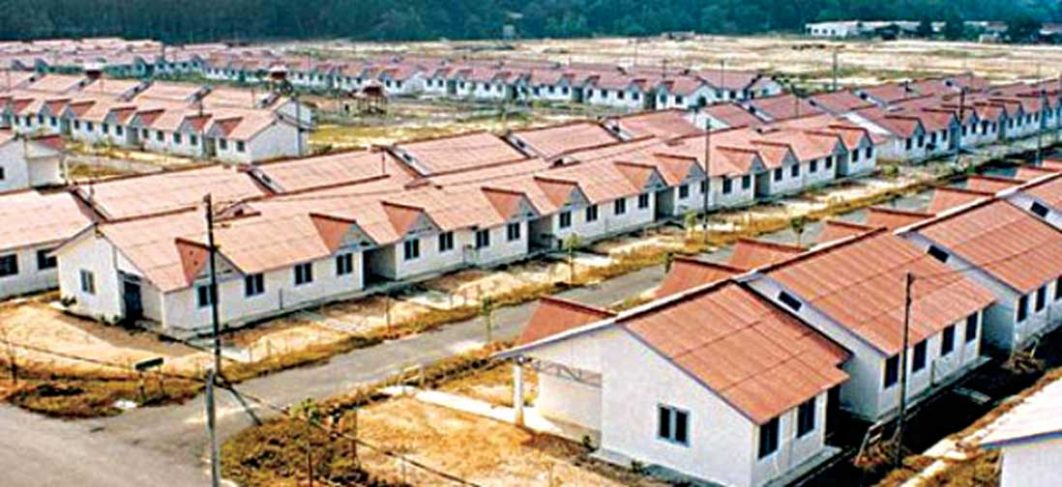
Here’s an example offer Andrew supplied to see the 2-5-7 formula in action:
” Let’s state you’re purchasing a support residential or commercial property: three-bedroom, one bath ranch for $65,000. You’re going to put $20,000 to $25,000 into rehabbing the residential or commercial property. You have a carrying cost of another $5,000 to $6,000, so you’re all in expense into the residential or commercial property is someplace around $90,000.”
” This is the most important part, which to me [distinguishes] investing versus what many people do, and that is the residential or commercial property requires to assess on a conservative re-finance appraisal for $120,000 to $130,000. That’s the key thing – that’s the only way you’re going to be able to get all the capital that you put into the residential or commercial property out, so that you can efficiently recycle the same money over and over and over.”
” So the residential or commercial property appraises for about $125,000. The loan provider is going to provide you about 75% of assessed value … That’s the essential thing. That’s the benchmark people need to look at. If the residential or commercial property evaluates for $120,000 to $135,000, now they’ll offer you the $90,000 to $95,000 refinanced.”
” So you take that loan, you pay your very first loan provider off – the loan you utilized to purchase the residential or commercial property and to do the rehab – and after that you simply recycle the exact same funds. Or if it’s your own money, that’s fine also, but you just duplicate that process over and over and over, [with the] objective being you need to get to a minimum of 5.”
Related: How to Secure a Supplemental Multifamily Loan
How to Finance the Properties, Completing the “Buy” Step of the well-known BRRRR Strategy?
On the front-end, Andrew discussed that there are three major ways he funds his offers:
1. Partnership- “Top, you can partner with somebody that has the capital and do a 50/50 joint venture. They buy the residential or commercial property, they put up the money for capital [and] you’re the driving force. You’re doing all the work, but you’re quiting 50% of the returns. That’s where I began at first”
2. Hard Money Lender- “The second method to do it is the conventional path, which is you obtain money from a difficult cash lender, and put in some of your own money.”
3. Private Money- “The 3rd path, which we tend to use the most [is] personal cash … Join your regional REIOs, sign up with the regional groups; whichever town you remain in, there are lots of them. There are people that are prepared to make loans out of their IRAs, they have individual money, and you end up paying anywhere from 8% to 12% and that’s what we tend to do which’s what we constantly attempt to get individuals to understand – there’s a lot of cash out there where people want to loan for the front end of the deal.”
As a home syndicator who often uses the BRRRR Strategy myself, this last option – private cash – is my support. Here are posts on the most efficient techniques for raising capital from private investors:
My Four-Step Apartment Syndication Money-Raising Process
3 Ways to Raise Over $1 Million for Your first Apartment Syndication
A 5-Step Process for Raising BIG Capital For Multifamily Syndication
4 Principles to Source Capital from High Net-Worth Individuals
4 Non-Obvious Ways to Raise Private Money for Apartment Deals
How to Overcome Objections When Raising Money for Multifamily Investing
On the back-end re-finance, the greatest obstacle Andrew dealt with in concerns to following this handle the BRRRR Strategy and purchasing 5 residential or commercial properties in 2 years is that many property lending institutions will typically just offer as much as 4 loans. However, he has found an option to his problem: commercial loans at small, local banks.

“Basically, a five-year balloon with a 25-year amortization. It’s a commercial loan at 5, 5 and a half percent,” Andrew described. “The speed at which you can scale and grow is much faster.”
Related: How a House Syndicator Secures Financing for a Multifamily Deal
“We tend to go to the little banks that remain in town. Typically, they’ll loan on anywhere from one to 5, 10, fifteen, twenty ranches. We’re not going to go to Chase Bank and we’re not going to go to the huge loan providers, because they don’t really provide these programs for small financiers.”
Related: Take Notice Of These Five Loan Components to Maximize Your Apartment Returns
Meet the Bank’s VP
When Andrew walks into a small bank to get a loan and execute his BRRRR Strategy, his goal isn’t to speak to a teller or a manager or a loan officer. He wants to go straight for the bank’s Vice-President. “You always wish to go and straight speak with the VP. Typically, at these little banks, the VP is basically the primary guy there, and that’s the individual you wish to technique.”
When approaching a conversation with a bank VP, the very first thing Andrew does is describes, in 2 minutes or less, his organization plan. A condensed variation of his two-minute elevator pitch is, “Hey, we’re buying foreclosure type of residential or commercial properties or financial investment residential or commercial properties that are rentals. When we pertain to you, they’re going to be bought, they’re going to be already stabilized (they like that word) and there’s already an existing occupant. We do two-year to three-year (minimum) leases just; we do not do short-term leases.”
Next, Andrew explains he has his version of the BRRRR Strategy, the 2-5-7 formula, in addition to his approach of aggressively paying down the residential or commercial properties in 7 years. Then, he goes into more details and reveals the VP a couple of successful past offers. However, if you’re brand name new, just show them a residential or commercial property or 2 that you have in the works.
How to Find Local Banks
A great resource for finding a local bank in your target market is https://www.bauerfinancial.com/home.html. Also, Andrew advises, “whatever community you reside in, I would draw a 10 to 15 mile radius around it, and after that start with the ones that are closest to wherever you’re going to purchase residential or commercial properties. Especially if it’s in a B-market, a C+ type of market, then the banks that are regional in that area, they have depositors from that specific location and they require to make a specific amount of loans in that particular market. So that’s the top place to start.”
Advantages of Local Banks
Besides the ability to offer more loans than a standard bank, Andrew stated regional banks have three additional advantages:
Building Relationship- “As you begin developing relations, as you start having reliability with a specific bank, they’ll scratch their arms a little bit, however in basic, the place to start always is the neighborhood banks – they want to have a relationship; it’s a relationship sort of financing, and they truly like that word. If you enter and say, ‘hey, we want to develop a relationship with you’ and you inform them that you’re going to put your rental deposits in their bank, they’re all over that since that’s really what in the long run they’re looking for.”
Flexible Loan Qualifications- “They do not have strict requirements. For people who might not have a W-2 earnings, they’ll work with 1099. If somebody does not have a W-2 or 1099, but has retirement income, they’ll deal with. If someone doesn’t even that but has some assets, an excellent portfolio in the stock exchange, or simply money, they’re a lot more flexible and they’re not as sensitive, even in the department of credit rating.”
Loans to Business Entity- “As you work with these industrial banks, you can purchase residential or commercial properties in your LLCs, you can buy residential or commercial properties in your S Corps, you can purchase companies under a trust.”

Related: How a “Rich Dad Advisor” Directs Investors to Transfer Title to an LLC
Conclusion
Andrew follows the 2-5-7 investment formula (which resembles the BRRRR Strategy): acquire a minimum of 5 residential or commercial properties in 2 years and pay them off in 7 years.
The three ways Andrew finances his deals on the front-end are collaborations, tough money, or personal money loans. On the back-end, he refinances the residential or commercial properties with a business loan from a small local bank. When walking into a bank, Andrew goes directly to the Vice-President and discusses his service plan.
For those thinking about following this strategy or simply wish to discover a little regional bank, see: https://www.bauerfinancial.com/home.html. The three main advantages, amongst many others, of utilizing a little regional bank is the capability to form relationships, versatile loan credentials, and lending to your company entity.
Are you a novice or a skilled investor who wishes to take their realty investing to the next level? The 10-Week Apartment Syndication Mastery Program is for you. Joe Fairless and Trevor McGregor are prepared to draw back the drape to reveal you how to get into the game of apartment or condo syndication. Click on this link to discover how to get started today.